Bering Sea bold: a website as loud as the line outside.
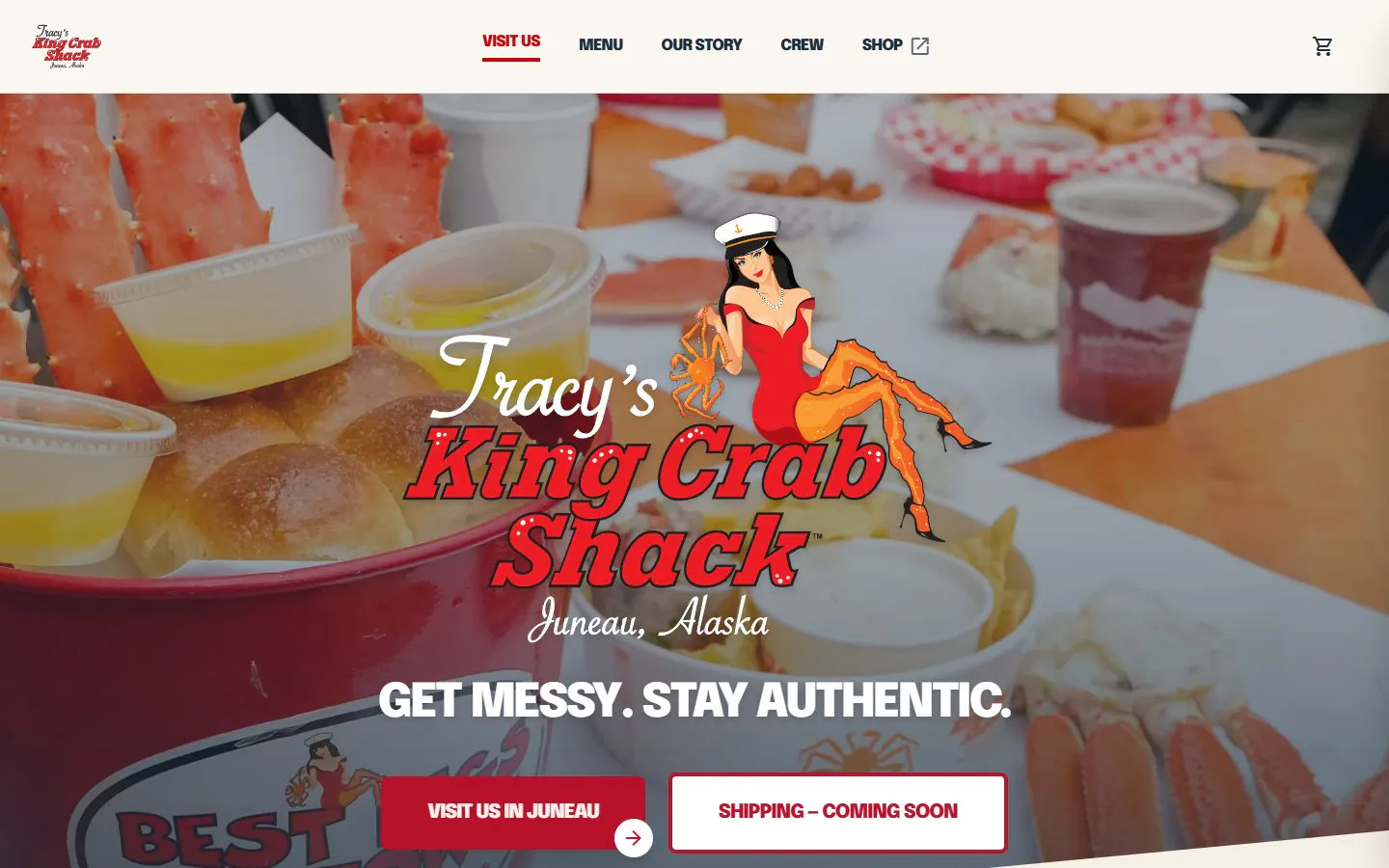
Tracy’s King Crab Shack is a Juneau, Alaska institution on the downtown waterfront, steps from the cruise dock, with lines of cruise-ship visitors out the door. Most guests arrive on a phone with a few hours ashore, and many have never cracked a king crab leg. They need to know where the Shack is, how the line works and what to order, and they need it fast. I rebuilt the website around the brand’s “Bering Sea Bold” attitude, restyled its Shopify store to match, and built an admin CMS so the team can update the menu, hours, reviews and jobs themselves.
The homepage answers the visit before it happens: the five-minute walk from the dock, the wait at peak hours, the communal tables, the bibs and the claw saw, and how ordering at the counter works. Then the line itself becomes the introduction. The QR Story Portal is a phone-sized, swipe-through story guests open from a QR code while they wait: seven full-screen video chapters on how the crab is caught, life on the boat, the species and how to order, with dot navigation, sharing and deep links.
Positioning
A dockside restaurant in a cruise port competes for a few hours of a visitor’s day. Guests decide on the way off the ship, from review apps, port maps and whichever line looks longest, and most of them will never be back in town. The site is built for that decision and for the relationship after it.
Answers before the line
Review listings tell a visitor a place is good, not how to do it. The homepage covers the walk from the dock, the wait at peak hours, the shared tables, the bibs and the claw saw, and ordering at the counter, so a first-timer arrives knowing the drill.
The line as an introduction
A QR code in line opens the Story Portal: how the crab is caught, life on the boat, the species and how to order, in short video chapters. By the time a guest reaches the counter, the choice is already made.
A menu that helps you choose
Crab is priced by the market, and a first-timer can’t tell one species from another. The live menu shows market price where it applies, “Crab 101” cards explain each species, and “What should I order?” turns four questions into three dishes.
The Shack, back home
The Shopify store is restyled to match the site and linked from every page, and an email sign-up tagged by source keeps visitors in touch once the ship has sailed.
The result treats a visitor’s few hours ashore as the whole journey: find the Shack, know what to expect, decide in line, and stay in touch after the ship leaves.
Design System
Color
Typography
Tech Stack
Key Features
QR Story Portal
Guests in line have time and a phone. Seven snap-scrolling video chapters cover the catch, the boat, the crab and how to order, with dot navigation, deep-link hashes, native sharing, off-screen video pausing and reduced-motion support.
“What Should I Order?”
First-timers stall at the counter. A four-question picker scores the menu and recommends the top three dishes, with an offline fallback menu.
Live Menu
Prices follow the market, so the menu can’t be printed once. It is served from Firestore with category pills, four price modes (single, tiers, market price, custom label) and “Crab 101” species pop-ups.
Admin CMS
In season, things change daily. Owner, admin and editor roles manage the menu, hours, reviews, gallery, job openings, applications and customer stories without a developer.
Careers & Crew Area
A seasonal business hires for every season. An open-positions grid with an application form, plus an access-code-gated crew handbook.
Email Capture
Visitors leave Juneau within hours. Sign-ups are tagged by source and mirrored to the newsletter automatically by a Firestore trigger, so the relationship outlasts the port call.